Start from the homepage
Return to the main Easy Moving London page for removals, storage and moving services.
Household, Moving and Business Storage
Storage can provide a practical solution when moving dates do not align, a new property is not ready, a business is relocating in phases or only part of a household is needed immediately.
Easy Moving London provides storage services that can be coordinated with household removals, office relocations, international moves and stand-alone collection or delivery projects. The service can be planned for a few boxes, selected furniture, a full household or approved business assets.
Our service can include a survey, packing, collection, inventory preparation, transport into storage, recurring storage, release handling and delivery to the final address.
Customers searching for moving and storage services should compare more than the monthly rate. Collection, intake handling, packing, inventory work, access, retrieval, release and redelivery can all affect the total cost.
The most suitable arrangement depends on why the goods are being stored, how long they may remain there, whether individual access is required and whether they will later move within the UK or internationally.
Return to the main Easy Moving London page for removals, storage and moving services.
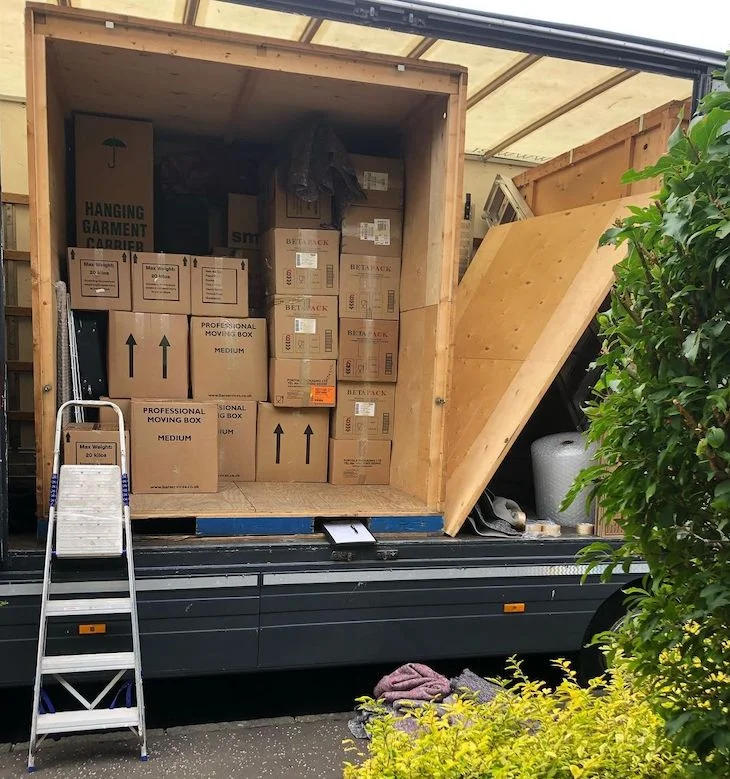
Storage is often arranged alongside packing, collection, transport and redelivery for home moves.
Storage can support office moves, phased relocations, furniture holding and business asset handling.
The best storage plan begins with the next stage of the move. Goods being held for two weeks before delivery to a new home have different requirements from furniture being stored for several years.
Easy Moving London starts by identifying what will enter storage, how it should be packed, whether individual access is needed and where the goods are expected to go later.
A customer moving abroad may need export-ready packing and a future international delivery. A family waiting for completion may need short-term household storage and rapid redelivery. A business may need a controlled asset inventory and phased retrieval.
The written quotation should identify the collection, packing, intake handling, storage rate, minimum period, release charges, access arrangements and redelivery assumptions.
Customers should update Easy Moving London when the inventory, storage period, access requirement or final destination changes. Additional goods or a different delivery route can affect the space, handling and cost.

The exact services included will be confirmed in the written quotation.
A home or video survey can estimate the volume and identify furniture, appliances, boxes and specialist items.
The survey also helps determine whether packing, dismantling or custom protection is needed before storage.
Easy Moving London can collect goods from a home, office, storage unit or another approved location.
Provide floors, lifts, parking and access restrictions before the collection date is confirmed.
Goods can be packed for short-term or longer storage using suitable cartons and furniture protection.
Fragile, high-value or unusually shaped items may require additional preparation.
Suitable furniture can be dismantled where this improves access or storage efficiency.
The quotation should identify which items are included and whether reassembly is included in the later delivery.
Household contents can be stored during a move, renovation, temporary relocation or downsizing project.
The service can include boxes, furniture, appliances and approved personal belongings.
Approved office furniture, crates, archives and selected business assets can be stored during a workplace relocation or refurbishment.
An asset inventory and authorised release contact can be included.
Goods can be stored in the UK before export or held after destination customs clearance where suitable facilities are available.
The packing and inventory should be prepared according to the future international route.
Packages and furniture can be numbered and recorded for storage and later redelivery.
A clear inventory is particularly important where only part of the stored consignment may be released.
Individual retrieval may be possible depending on the storage method and facility.
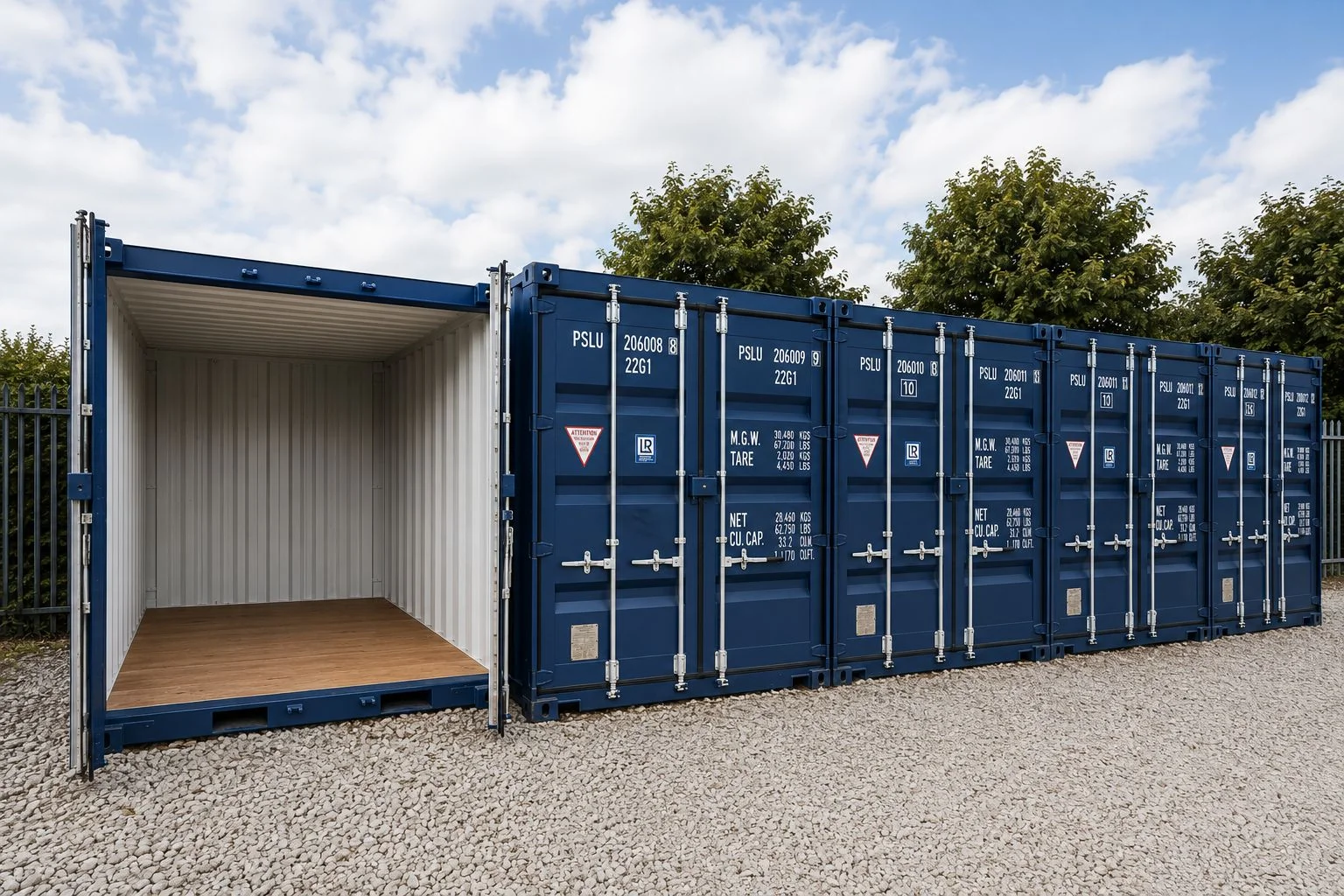
Containerised storage normally offers less frequent access than a self-storage unit or open warehouse arrangement.
When the goods are ready to leave storage, Easy Moving London can assess delivery to a UK address or onward international move.
Release notice, destination access and final inventory should be confirmed before delivery.
Provide the collection postcode, approximate volume, preferred date, expected duration and whether access may be required.
Easy Moving London reviews the goods, furniture, access, packing requirements and likely storage space.
The moving team recommends a suitable storage and handling arrangement according to the goods and expected access.
The quote identifies collection, packing, intake handling, storage rate, minimum period, release and redelivery assumptions.
The customer removes restricted goods and separates anything that should remain accessible.
Goods are packed by the customer or Easy Moving London and labelled according to the agreed inventory.
The crew protects, loads and transports the goods to the approved storage facility.
The goods are received, recorded and placed into the allocated storage arrangement.
Recurring charges and any agreed access or retrieval requests are managed according to the storage terms.
The customer gives the required notice, confirms the destination and approves the release inventory.
The goods are loaded and delivered to the agreed address or prepared for another moving service.
The customer checks the delivered inventory and reports visible issues under the applicable procedure.
Household storage can include normal furniture, cartons, clothing, books, kitchenware, appliances and approved personal belongings.
The volume should be estimated after deciding what will be moved, sold, donated or retained at the current property.
Storage can give a customer time to decide which belongings fit a smaller home rather than making every decision before moving day.
Where a customer moves into furnished temporary accommodation, most furniture can remain in storage while essential personal goods travel with the customer.
Goods connected with an estate can be stored while valuations, distributions, sales or property arrangements continue. The authorised customer should confirm who can request access or release.
Moving dates do not always align. A property sale can complete before the new purchase, or a tenancy can end before the next home is available.
Easy Moving London can collect and place the household into storage before the customer receives the new keys.
The final delivery is planned when the new property, date and access are confirmed. This is usually clearer than trying to keep goods on a loaded vehicle for an uncertain period.
The customer can request that selected essentials travel to temporary accommodation while the main household enters storage.
Storing furniture during building work can create safer working space and reduce the chance of dust or accidental damage.
Where a property chain changes, storage can provide a practical contingency. Availability, additional handling and revised delivery costs should be confirmed.
Short-term storage can mean a few days, several weeks or a small number of months. The minimum charging period depends on the storage provider and arrangement.
If the goods may be needed at short notice, ask how much release notice is required and whether the storage method allows straightforward retrieval.
Even a very short storage period can involve collection, intake and release handling. The total cost may therefore be higher than the weekly rate alone suggests.
Long-term storage can be suitable for extended overseas assignments, downsizing, retained family furniture, archives or assets that may be reused later.
The longer the expected period, the more important it is to compare the ongoing storage cost with the value and likelihood of reusing the goods.
Long-term storage may justify more detailed packing, furniture protection and condition records than a short holding period.
Keep the storage provider updated when the customer's telephone number, email, billing address or authorised contact changes.
Businesses and households should review the inventory periodically and decide whether all items still need to remain in storage.
Storage providers use different systems. The quotation should identify the actual storage method rather than using the word “storage” without explanation.
Goods are normally packed into dedicated storage containers or modules and handled as a unit. This can reduce repeated handling when access is not required frequently.
Access to individual items may require the container to be retrieved and opened by appointment.
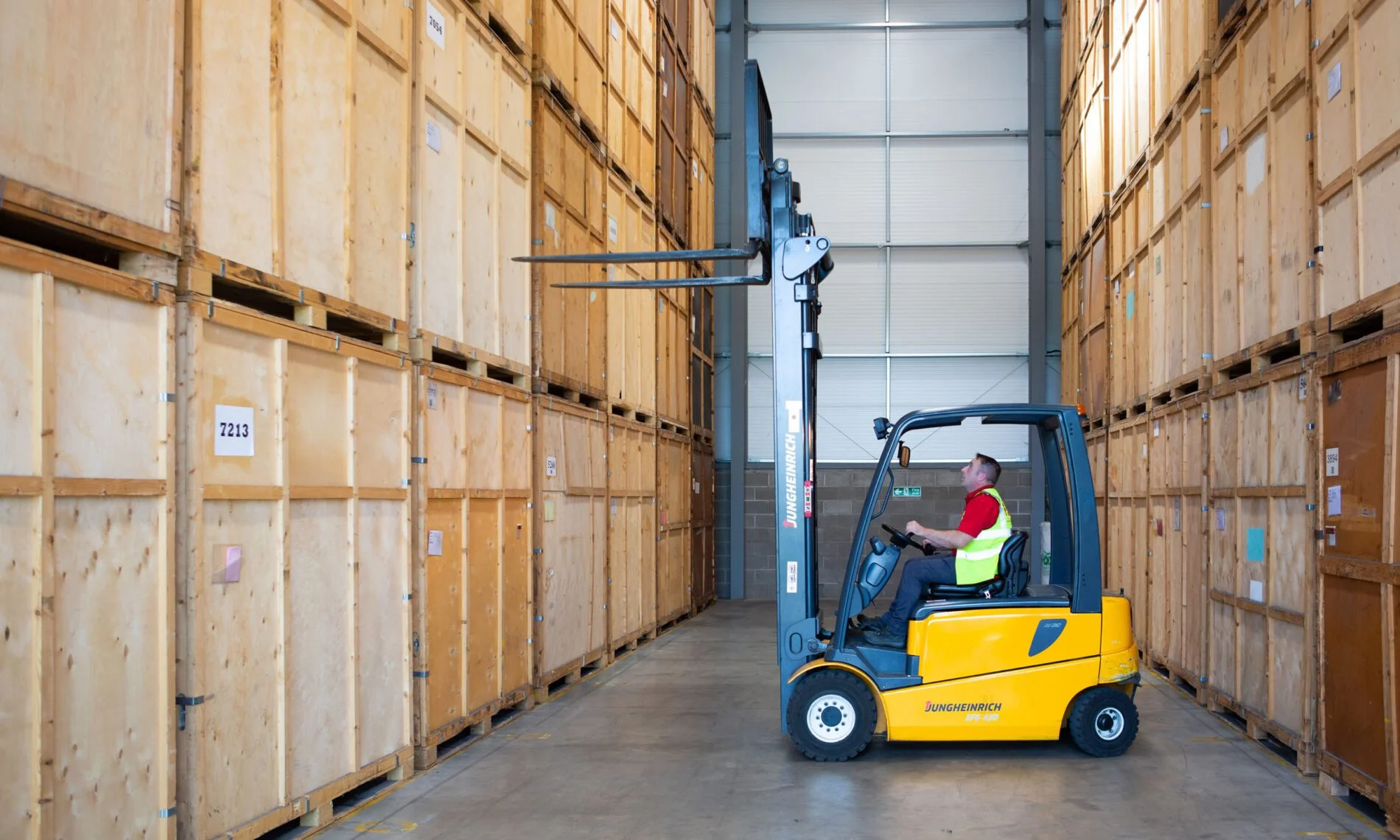
Goods can be placed into an organised warehouse arrangement using pallets, crates, racks or allocated floor space.
Warehouse storage can offer more flexible inventory handling, but the exact protection, access and pricing depend on the facility.
Ask how the customer's goods are separated, identified and protected from other stored consignments.
Some facilities use portable storage modules that are loaded at the property or warehouse. Ask whether the goods remain in the same module until redelivery.
Managed storage and self-storage are not the same service.
The removal company collects the goods, prepares them for storage and places them into the facility. Access and release are arranged through the provider.
The customer normally rents a unit and controls the lock and access. The customer or mover transports the goods into and out of the unit.
Managed storage can suit customers who do not need frequent access and prefer collection and redelivery to be coordinated. Self-storage can suit customers who need regular access and are willing to manage the unit.
A self-storage monthly rate may exclude van hire, labour and packing. Managed storage may include or separately charge collection, intake, handling and delivery.
Goods entering storage should be packed according to their fragility, the expected period and the likely handling.
Furniture can be protected using suitable covers, wrapping and blankets during collection and storage handling.
Use strong cartons in suitable sizes. Heavy books should normally be packed into smaller boxes than clothing or bedding.
Each carton should have a useful description and package number. Avoid relying only on the word “miscellaneous”.
Appliances should be disconnected, drained, cleaned and dried according to the manufacturer's instructions before storage.
These appliances should normally be empty, defrosted, clean and dry. Doors may need to remain slightly open to reduce odour and moisture.
Sofas, chairs and mattresses should be clean and dry before packing. Moisture trapped under covers can create problems during longer storage.
Avoid placing damp or recently treated furniture into storage. Loose parts, shelves and fittings should be labelled.
Back up data, remove personal or confidential media where appropriate and keep cables labelled with the correct device.
A clear inventory helps track what entered storage and what should be released later.
Each carton, wrapped furniture item and separate object should have a unique package number where an itemised inventory is being used.
Photographs and condition notes can be useful for high-value, antique or already damaged items.
Business inventories can include asset numbers, departments, owners, retention dates and authorised release contacts.
Any item added, removed or retrieved should be recorded so that the storage inventory remains accurate.
Access arrangements depend on the facility and storage method. Do not assume that stored goods can be visited or opened at any time.
This can suit a household move where the complete consignment will remain stored until one final delivery.
The provider can retrieve a container, pallet or allocated area for access by appointment. Handling or access charges can apply.
Retrieving one item is easier where the inventory identifies its package number and storage location.
Customers needing frequent access may be better suited to self-storage or another access-focused facility.
The customer should identify who is allowed to request access, retrieve goods or authorise release.
Ask how much notice is required for access and whether appointments are available during weekends or public holidays.
Businesses can use storage during an office move, lease transition, refurbishment, downsizing or multi-site consolidation.
Desks, chairs, tables, storage units and approved modular furniture can be stored for later reuse.
Archive boxes should be labelled according to the agreed department or reference system. Confidential records require suitable access controls and retention procedures.
Reusable crates can be held temporarily during a phased move, although rental and collection periods should be controlled.
Approved computers, monitors and printers can be stored where they have been prepared properly. Data protection, backups and technical requirements remain the client's responsibility.
Storage can provide time to decide whether furniture will be reused, relocated, donated, recycled or disposed of.
A business can retrieve assets by department, floor, project stage or destination where the inventory and storage arrangement support it.
International relocations often require storage because the customer leaves the UK before the destination property, visa, customs records or shipping date are ready.
Goods can be collected and stored in the UK until the international route and documents are confirmed.
Where the goods will later travel by road, sea or air, the packing and inventory should be prepared for the intended international service.
A customer can ship part of the household abroad and retain selected goods in UK storage. The two inventories should remain clearly separated.
Some destination agents can store goods after customs clearance. In other destinations, customs or port storage is expensive and should not be treated as normal household storage.
The future route can use European road transport, groupage, a dedicated container or air freight according to the destination and volume.
Customers should understand how the proposed facility controls access, identifies stored goods and responds to incidents. Security arrangements differ between facilities and should not be assumed from the word “storage” alone.
Ask who can enter the storage area, how visitors and contractors are authorised and how access requests are recorded. Managed storage normally limits access to authorised staff and customers attending by appointment.
A facility can use locked compounds, controlled gates, alarms, lighting, CCTV or other measures. Easy Moving London should publish only the features verified for the actual facility being offered.
Ask about the facility's fire-detection, compartmentation and emergency procedures. Goods that increase fire risk, including fuels, gas cylinders and flammable chemicals, should not enter ordinary storage.
Goods should be clean and dry before storage. Customers should also ask how the facility manages leaks, flooding, condensation and ventilation.
Ordinary household storage is not necessarily temperature or humidity controlled. Artwork, wine, musical instruments, documents, photographs, medicines and specialist equipment can require a purpose-designed environment.
Food, plants, waste and damp goods can attract pests. Facilities should maintain appropriate inspection and pest-management procedures, while customers should ensure that stored goods are clean and suitable.
Facility security does not replace suitable insurance or storage protection. Ask how values are declared, what risks are covered and which exclusions or excesses apply.
Furniture can be removed before decorating, flooring, structural work or kitchen installation begins. This creates working space and reduces exposure to dust, paint and accidental impact.
The return delivery should be scheduled after the property is safe, clean and accessible. Easy Moving London does not inspect or certify whether renovation work is complete.
Customers moving into a smaller property may not know immediately which furniture will fit. Temporary storage allows the customer to measure the new space and make decisions after the move.
Review the storage inventory after a defined period so that low-value items do not remain stored indefinitely without a clear purpose.
Students can store cartons, books, clothing, bicycles and approved small furniture between tenancies or academic terms. Collection and delivery should be coordinated with accommodation check-out and check-in times.
Shared accommodation can make inventory and ownership labels particularly important.
Household goods can be stored while an estate is administered, a property is sold or beneficiaries decide how items will be distributed.
The authorised representative should confirm who may request access, release or delivery. Easy Moving London does not determine ownership or beneficiary rights.
Removing surplus furniture can create space for photography, viewings or property preparation. The goods can later be delivered to the new home or moved into longer-term storage.
A customer taking a furnished property abroad may store most of the UK household while shipping only essential goods. The retained and exported inventories should remain separate.
Office furniture, archives and approved equipment can be removed while a workplace is refitted. A phased return can follow the new floor plan and departmental priorities.
Storage terms normally exclude dangerous, illegal, perishable or unusually high-risk goods. The exact exclusions should be checked before collection.
Perishable and open food should not be stored with household goods. Even sealed food can attract pests or create odours over time.
Plants normally require light, water and ventilation and are generally unsuitable for ordinary storage.
Cash, jewellery, passports and irreplaceable personal documents should remain with the customer rather than entering normal storage.
Chemicals, fuels, pressurised containers and other dangerous goods require specialist handling and should not be placed into ordinary household or business storage.
There is no single reliable price. The total depends on volume, handling, storage method, duration, access and redelivery.
The amount of space required is one of the main pricing factors. A survey or item list helps estimate the volume more accurately.
Collection charges depend on distance, crew, vehicle, floors, lifts, parking and carrying distance.
Professional packing, cartons, furniture protection and custom cases can be charged separately.
The provider may charge for receiving, inventorying and placing goods into storage.
Storage can be charged weekly, monthly or by another agreed billing period. A minimum period can apply.
Appointments, container retrieval, item picking and repacking can create additional handling charges.
Removing goods from storage and preparing them for delivery can be charged separately from the recurring rate.
The final delivery price depends on the destination, vehicle, crew and property access.
Goods leaving storage for another UK city or overseas destination require a separate moving or shipping quotation.
Ask what liability or cover is included, which optional protection is available and how high-value goods must be declared.
Storage works best when collection, packing, inventory, recurring storage and final delivery are planned as one service.
Easy Moving London can assess the goods, arrange collection and prepare a written quotation showing the expected handling and storage costs.
We encourage customers to compare the complete service rather than selecting a provider by the lowest monthly rate alone.
Easy Moving London can assess household, moving, furniture, business and international-move storage, including collection and later delivery.
The cost depends on volume, collection, packing, intake handling, duration, access, release and redelivery. A complete quote is more useful than the monthly rate alone.
Collection can be arranged subject to confirmed coverage and property access. Provide the postcode, floors, lifts and parking details.
Full packing, fragile-item packing and furniture protection can be included according to the quotation.
Yes, subject to the storage terms. Use strong cartons, avoid overloading them and label each box clearly.
Short-term storage usually covers a brief period between properties, during renovation or while waiting for keys.
Long-term storage can be used for extended overseas assignments, downsizing, retained furniture, archives or business assets.
A minimum charging period can apply depending on the provider and storage arrangement. Check the quotation.
Access depends on the facility and method. Some arrangements allow appointments, while containerised storage may be intended for infrequent access.
Individual retrieval may be possible where the inventory identifies the item and the storage arrangement supports access. Handling charges can apply.
Goods are stored in dedicated containers or modules and handled as a unit. It can reduce repeated handling where regular access is not required.
The removal company collects and places the goods into storage, then coordinates access and release through the provider.
With self-storage, the customer rents and controls a unit. Managed storage includes collection and provider-controlled intake and release.
A full household can be assessed using a survey to estimate the volume, packing and handling requirements.
Yes. Selected furniture can be collected and stored, subject to the facility and item types.
Approved appliances can be stored after they are disconnected, cleaned, drained and dried according to the manufacturer's instructions.
They should normally be empty, defrosted, clean and dry before storage. Follow the manufacturer's instructions.
Plants are generally unsuitable for ordinary storage because they require light, water and ventilation.
Perishable and open food should not be stored. Even sealed food can attract pests or create odours.
Cash, jewellery, passports and irreplaceable valuables should remain with the customer rather than entering normal storage.
Yes. Goods can be stored in the UK before export or retained while the customer lives overseas.
The goods can be assessed for a later European or worldwide move. Export packing, customs and international transport require a separate quotation.
Approved desks, chairs, tables, storage units, crates and selected office assets can be stored during a workplace move or refurbishment.
Records can require controlled inventory and access arrangements. The business remains responsible for its data-protection and retention obligations.
Additional goods may be accepted subject to available space, collection arrangements and updated inventory and charges.
The notice period depends on the storage arrangement, provider capacity and destination. Check the written terms.
Yes. The final destination can differ from the original plan, but a revised delivery quotation may be required.
Ask what liability or protection is included, which optional cover is available and whether high-value items must be declared.
Contact the provider before the planned end date. Recurring charges normally continue until the goods are released.
Book as early as possible once the collection date and approximate volume are known, especially during peak moving periods.
Tell Easy Moving London what needs to be stored, where it is located, how long it may remain in storage and where it is likely to be delivered later. We can assess the collection, packing, volume and handling and prepare a tailored quotation.