Corporate, Office and Business Relocations

Corporate Moving and Business Moving Services

A business move is not simply a larger version of a house removal. Offices, studios, warehouses, clinics, schools and commercial premises contain employees, IT systems, confidential records, furniture, specialist equipment and business-critical assets that must be moved according to a controlled plan.

Easy Moving London provides corporate moving and business moving services for organisations relocating locally, between UK cities or internationally. We can assess anything from a small office and a few workstations to a multi-floor, multi-department or phased corporate relocation.

Our service can include a site survey, move planning, packing crates, furniture protection, department labelling, IT-equipment transport, file and archive moves, dismantling and reassembly, storage, asset inventories and delivery to the new workplace.

A successful business relocation should protect continuity. The objective is not only to move the physical contents but to help the organisation resume work in the planned order, with priority teams, technology, furniture and records available when needed.

Easy Moving London can coordinate with facilities teams, office managers, HR, IT providers, landlords, fit-out contractors and nominated project leads. The exact responsibilities are agreed before the move so that each party understands who will disconnect equipment, prepare the premises, control access and approve changes.

Whether the requirement is a corporate moving company for a national headquarters, an office moving company for a growing team or a business removals service for a smaller workplace, the quotation should be built around a detailed inventory, programme and access plan.

Request a corporate moving assessment

  • Office and workplace relocations
  • Corporate headquarters moves
  • Small-business removals
  • Multi-floor and multi-site moves
  • Phased, evening and weekend relocations
  • IT and technical-equipment coordination
  • Office furniture dismantling and installation
  • Archive and confidential-record moves
  • Commercial storage
  • International corporate relocations
Office team packing boxes during a corporate relocation
Corporate moving planned around people, desks, IT equipment, records, storage and business continuity.

Business Moving Planned Around Continuity

The physical move is only one part of a corporate relocation. The organisation may also be managing a lease expiry, refurbishment, workplace redesign, IT migration, employee communication and the disposal or storage of surplus assets.

Easy Moving London starts by identifying what must move, what must remain operational, which teams have priority and which work must be completed by other contractors. This information is used to create the moving scope and working sequence.

A small office move may be completed in one day. A larger corporate move can require several phases, evening work, weekend access, temporary storage and different delivery zones for each department.

Office furniture and boxes prepared for a corporate move
Business removals can combine survey work, packing materials, furniture handling, storage and timed delivery.

The quotation should identify the premises, estimated inventory, workstations, furniture, equipment, crates, labels, crew, vehicles, storage and known exclusions. Important assumptions should be written down rather than left for moving day.

Changes should be controlled through a nominated project contact. Adding departments, assets, additional delivery floors or disposal work after the programme has been agreed can affect labour, vehicles, timing and cost.

Business environments that can be assessed

  • Corporate offices and headquarters
  • Small and medium-sized businesses
  • Professional-services firms
  • Technology and creative offices
  • Schools and training centres
  • Clinics and non-clinical healthcare offices
  • Libraries and archive environments
  • Retail back offices and support premises
  • Laboratory and research offices
  • Warehouses and light commercial premises
  • Public-sector and third-sector workplaces
  • Co-working and serviced-office moves

On This Page

  1. Corporate and business moving services
  2. Move project management
  3. How a business move works
  4. Office relocations
  5. Phased, evening and weekend moves
  6. IT and technical equipment
  7. Office furniture and installation
  8. Files, archives and confidential records
  9. Specialist business environments
  10. Commercial storage
  11. Employee communications
  12. Business continuity planning
  13. Corporate moving costs
  14. Business moving checklist
  15. Business address updates
  16. International corporate relocation
  17. Frequently asked questions

Corporate and Business Moving Services

The exact services included will be confirmed in the project quotation and scope of work.

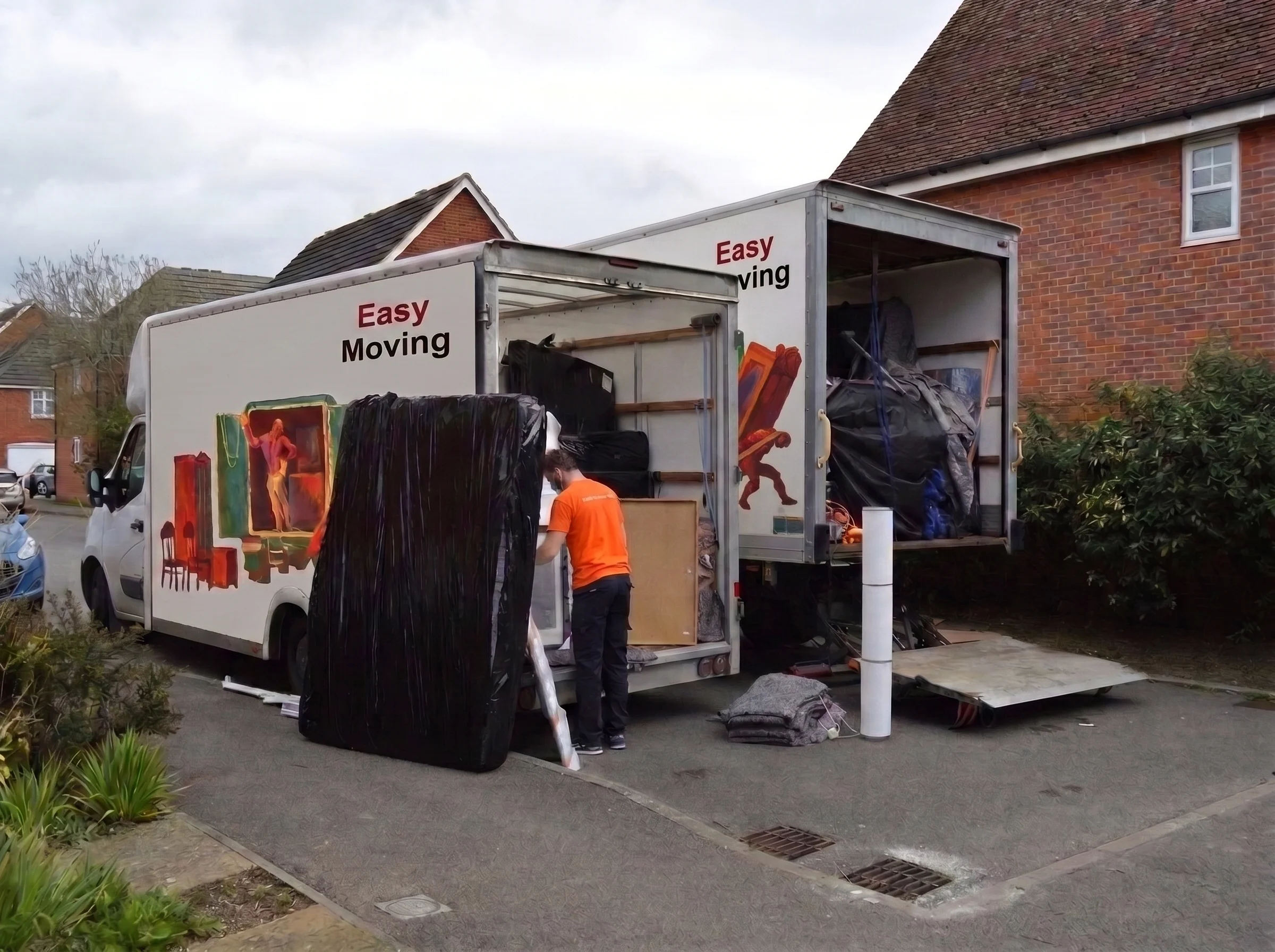
Easy Moving London Luton vans supporting a business relocation
Vehicles, crew and access planning can be matched to the size and timing of the business move.

Workplace Survey

The survey identifies workstations, furniture, files, IT equipment, specialist assets and access restrictions at the current premises.

The destination layout, delivery floors, lift use, loading area and operational priorities should also be reviewed.

Corporate Move Planning

A move plan can divide the work by department, floor, project phase, vehicle or delivery zone.

The plan should identify responsibilities, deadlines, access windows, escalation contacts and the order in which assets need to arrive.

Packing Crates and Materials

Reusable moving crates, labels, security seals and specialist containers can be supplied according to the project.

The crate-delivery and collection schedule should be agreed so staff have enough time to pack without creating unnecessary workplace disruption.

Office Furniture Relocation

Desks, chairs, storage units, meeting tables and suitable modular furniture can be protected, dismantled, transported and reassembled.

The furniture schedule should show the original location, destination position and any item that is being stored, reused or disposed of separately.

IT Equipment Transport

Computers, screens, docking stations, printers and approved technical equipment can be packed and transported using suitable protection.

Disconnection, data backup, network configuration and final reconnection should be assigned to the organisation's IT team or appointed technical contractor unless another written scope has been agreed.

File and Archive Moves

Files and archive boxes can be numbered and moved according to the department, shelf or destination sequence.

Confidential and personal-data records require controlled access, suitable containers and an agreed chain of responsibility.

Phased and Out-of-Hours Moves

Evening, weekend and phased services can help reduce interruption during normal business hours.

The feasibility depends on building access, noise restrictions, staff availability, security and the amount of work required.

Commercial Storage

Furniture, crates, files and approved equipment can be stored during lease transitions, refurbishment or phased occupancy.

The storage arrangement should identify inventory control, handling, recurring charges and the process for later retrieval.

Asset Reuse and Disposal Coordination

Surplus furniture and equipment can be separated into reuse, storage, donation, recycling or disposal categories.

Easy Moving London should only offer disposal and recycling services that are operationally available and supported by the appropriate providers and records.

International Corporate Moves

Businesses relocating teams or workplaces internationally can request export packing, road, sea or air transport, customs support, storage and destination delivery.

International employee household moves can also be managed under an employer-approved allowance.

Corporate Move Project Management

A project-managed office move gives the business one coordinated process for information, decisions, deadlines and changes. The scale of project management should match the complexity of the move.

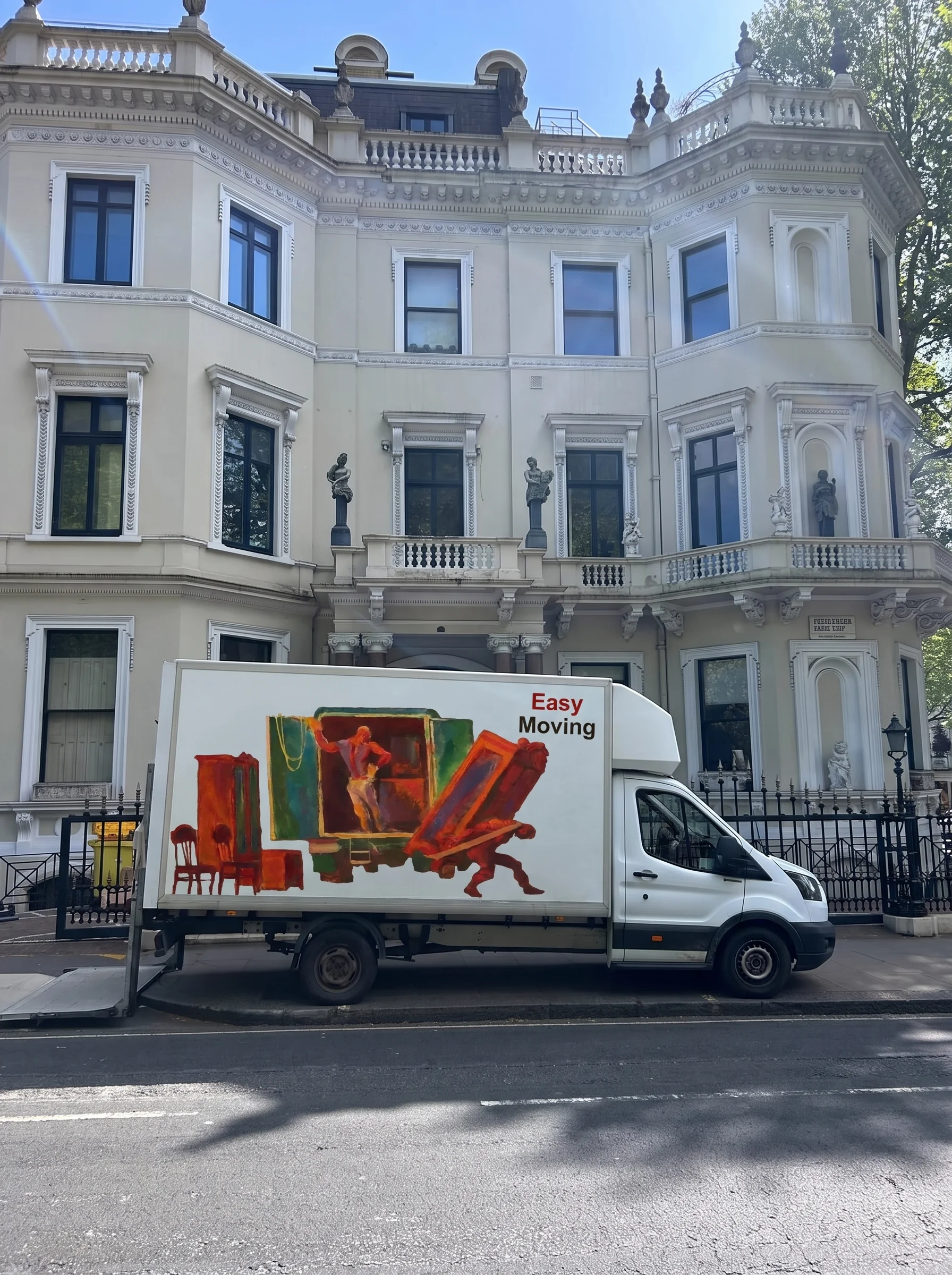
Easy Moving London van outside a London business property
Project-managed moves keep access, building rules, delivery windows and sign-off points visible from the start.

Nominated project contacts

The client should appoint one lead contact with authority to approve the move scope, programme and additional work. Larger organisations may also nominate representatives for IT, facilities, HR, finance, security and each department.

Easy Moving London should nominate the operational contact responsible for the survey, move plan, crew, vehicles and delivery sequence.

Move schedule

The move schedule can identify:

  • Crate delivery and collection dates
  • Staff packing deadlines
  • Furniture dismantling periods
  • IT disconnection windows
  • Department collection times
  • Vehicle arrival and loading slots
  • Destination delivery sequence
  • Furniture and workstation installation
  • Post-move crate collection

Risk and issue log

The project team should identify issues that could interrupt the programme, such as delayed building access, incomplete fit-out work, unavailable lifts, missing parking permits, unlabelled assets and unresolved IT responsibilities.

Change control

A corporate move can grow quickly when departments add furniture or request additional destinations. Changes should be recorded, costed and approved before they are added to the programme.

Move champions

Department move champions can help distribute instructions, confirm inventories and check that staff have packed and labelled their work areas correctly.

How a Corporate or Business Move Works

  1. Initial Consultation

    The organisation explains the current premises, destination, staff numbers, planned date, operational deadline and internal project structure.

  2. Site Survey

    Easy Moving London reviews furniture, equipment, records, floors, lifts, loading areas, security procedures and access restrictions.

  3. Destination Review

    The project team reviews delivery zones, floor plans, workstation layouts, furniture installation and the order in which departments need to become operational.

  4. Responsibility Matrix

    The business and movers agree who is responsible for IT disconnection, network services, packing, furniture, permits, security, disposal, cleaning and building handover.

  5. Written Scope and Quotation

    The quotation identifies the services, programme assumptions, crew, vehicles, equipment, materials, storage and exclusions.

  6. Move Programme

    The work is divided into preparation, crate delivery, packing, relocation phases, final delivery and crate collection.

  7. Employee Instructions

    Staff receive labelling, packing, security and personal-belongings instructions before the move.

  8. Pre-Move Audit

    The client and project manager check that assets are labelled, access is approved and destination areas are available.

  9. Move Execution

    The crew packs or handles the approved goods and moves them according to the department and destination sequence.

  10. IT and Furniture Installation

    Approved furniture is reassembled and equipment is positioned. Technical contractors complete the work assigned to them.

  11. Department Sign-Off

    Nominated representatives check that priority items have arrived in the correct areas and record outstanding work.

  12. Post-Move Support

    Remaining crates, stored assets, minor relocations and agreed follow-up work are completed according to the project plan.

Office Relocation Services

Office relocations range from a small team moving across town to a corporate headquarters moving across several floors or cities.

The survey should establish the number of workstations, meeting rooms, storage units, printers, kitchen areas, reception furniture, archive boxes and specialist assets.

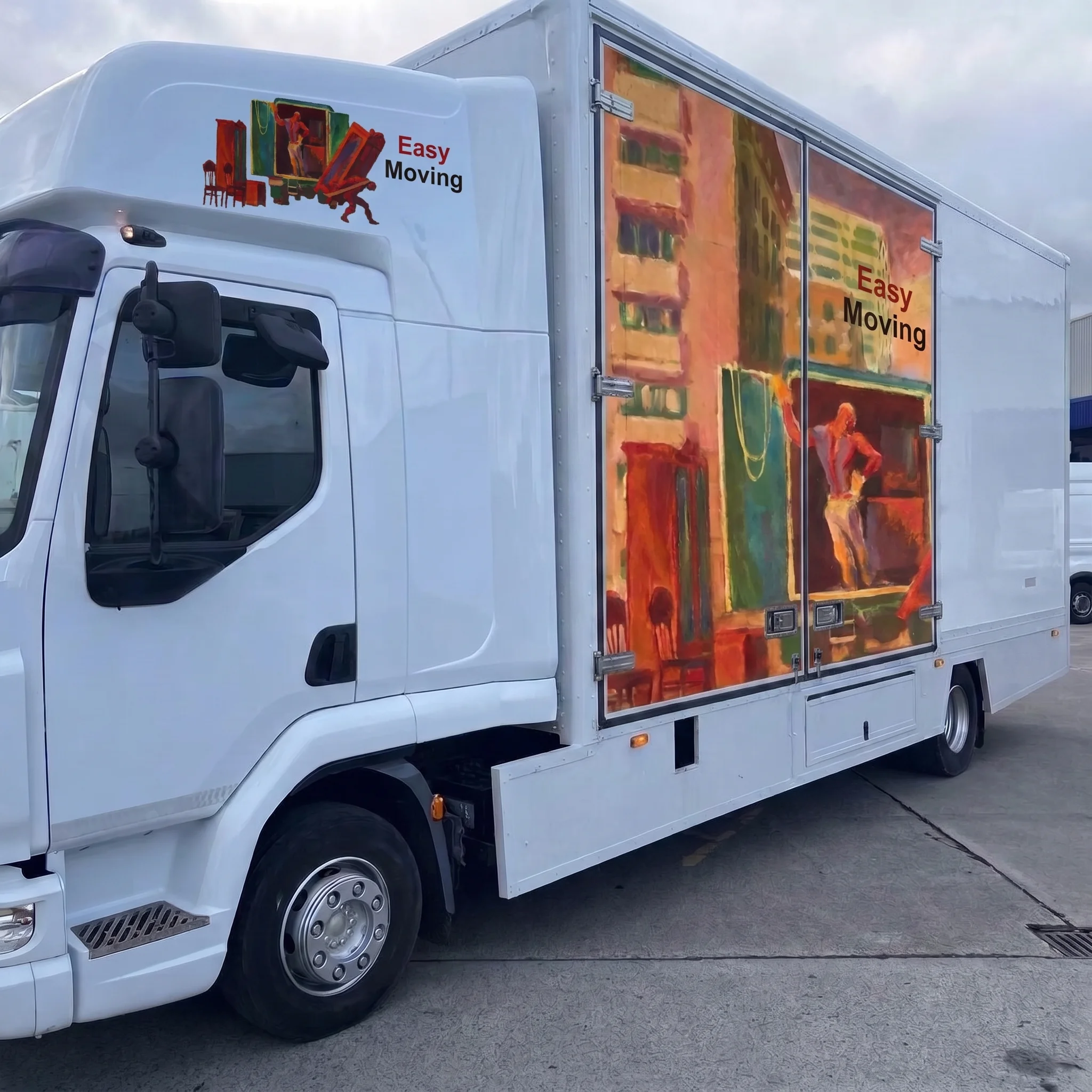
Easy Moving London branded removals truck prepared for commercial moving work
Easy Moving London can plan the right vehicle, crew and loading sequence for office and workplace relocations.

Small-office moves

A smaller office can often be packed and moved within one day, subject to access and the amount of dismantling and IT preparation required.

Large-office moves

Larger moves may be divided by floor, department or business function. A phased schedule can keep part of the organisation operating while other teams move.

Internal office moves

Businesses can also require moves within the same building. Internal moves still need planning where furniture, files, IT equipment and employees are changing floors or departments.

Office consolidation

A consolidation project can move several smaller offices into one larger workplace. Duplicate furniture and equipment should be identified before the move so that the new site does not receive unnecessary assets.

Decant moves

A temporary decant can move staff and equipment out of a building during refurbishment. The return move should be planned at the same time where possible.

Phased, Evening and Weekend Business Moves

Out-of-hours and phased moves can reduce interruption, but they require reliable access, security and staff coordination.

Phased moves

A phased move relocates departments or floors in a defined sequence. Priority teams can move first, while departments with fewer operational dependencies can follow later.

Evening moves

An evening move can begin after staff leave and position furniture and equipment before the next working day. The amount of work must be realistic for the access window.

Weekend moves

Weekend moves can provide a longer uninterrupted period, but building access, lift availability, security and technical support still need to be confirmed.

Live-working environments

Where the business remains open, moving routes should be separated from employees and visitors. Work areas, corridors and emergency exits must remain properly managed.

Noise and building restrictions

Managed offices and mixed-use buildings can restrict noisy work, lift use and loading outside normal hours. The client should obtain the building rules before the programme is finalised.

IT and Technical-Equipment Moving

IT is often the most time-sensitive part of an office relocation. Easy Moving London can coordinate the physical handling of approved devices, but the business should appoint a qualified IT team or contractor to manage technical shutdown, data protection, backup and reconnection.

Typical equipment

  • Desktop computers
  • Laptops and docking stations
  • Monitors
  • Printers and multifunction devices
  • Telephones and approved network equipment
  • Meeting-room displays
  • Audio-visual equipment
  • Server and communications hardware where separately scoped

Pre-move IT responsibilities

  • Back up business-critical data
  • Record asset and serial numbers
  • Confirm the destination desk allocation
  • Disconnect and label cables
  • Remove sensitive removable media
  • Confirm network and telecoms readiness
  • Test critical systems before the move

Server and data-centre equipment

Servers, racks and data-centre hardware require a specialist technical scope. Weight, rack configuration, shutdown, anti-static protection, vibration, environmental controls and recommissioning should be assessed separately.

Do not assume that normal office-removal pricing includes server migration or network engineering.

Destination readiness

Power, cabling, internet, telephones, network equipment and access should be ready before employees are scheduled to return.

Office Furniture Dismantling and Installation

Business furniture can include workstations, bench desks, meeting tables, storage walls, reception units, shelving and breakout furniture.

Furniture audit

The client should decide which furniture will be reused, stored, relocated elsewhere, donated, recycled or disposed of.

A furniture audit can prevent the team from moving items that do not fit the new layout.

Dismantling

Suitable modular furniture can be dismantled where necessary for transport and access. Fittings should be labelled and kept with the correct item.

Installation

Furniture installation should follow the approved destination layout. The client should identify workstation numbers, departments and any accessibility requirements.

Fitted and specialist furniture

Fitted storage, bespoke reception desks, laboratory benches, compact shelving and complex furniture systems can require the original manufacturer or another specialist contractor.

Furniture condition

Flat-pack and modular furniture can deteriorate after repeated dismantling. The survey should identify damaged or unsuitable items before the move.

Files, Archives and Confidential Records

Business records can contain personal data, commercially sensitive information, legal documents, financial records and confidential client material.

Inventory and labelling

Archive cartons should be labelled according to the agreed department, shelf range or reference system without displaying unnecessary sensitive information on the outside.

Controlled access

The business should decide who can pack, access, transport and receive confidential records. Secure containers and seals can be considered where appropriate.

Chain of responsibility

The project scope should identify when responsibility transfers between the client, removal crew, storage provider and destination representative.

Records going into storage

Stored records should remain retrievable under the client's retention and access policy. The inventory should identify the box, department, retention period and authorised contact.

Secure destruction

Records that are no longer required should not be placed into ordinary waste without an approved disposal process. Physical and electronic records should be destroyed using methods that prevent unauthorised disclosure.

Where an external provider handles confidential data or destruction, the organisation should review the provider's process and contractual responsibilities.

Specialist Business and Commercial Moves

Some premises contain equipment or environments that require a specialist survey in addition to ordinary office moving.

Examples

  • Laboratory and research equipment
  • Medical and dental equipment
  • Libraries and compact archives
  • Educational equipment
  • Printing and production equipment
  • Workshop machinery
  • Retail fixtures
  • Art and design studios
  • Broadcast and recording equipment
  • Safes and secure cabinets
  • Large-format printers
  • Server racks and technical infrastructure

Pre-move assessment

Provide dimensions, weight, photographs, manufacturer instructions, utility connections and destination access information.

Specialist contractors

Equipment requiring calibration, decontamination, engineering disconnection, lifting or manufacturer commissioning should be assigned to appropriately qualified providers.

Hazardous materials

Chemicals, gases, biological materials, fuels and other hazardous goods require specialist legal and transport controls. They are not part of an ordinary office-removal service.

Healthcare and research environments

Clinical records, medicines, samples and regulated equipment should be handled through the organisation's approved clinical, pharmaceutical or laboratory procedures.

Commercial Storage for Business Moves

Commercial storage can provide a buffer between leases, refurbishment phases, fit-out work and final occupancy.

Items commonly stored

  • Office furniture
  • Moving crates
  • Archive boxes
  • Approved IT equipment
  • Marketing materials
  • Meeting-room furniture
  • Surplus workstations
  • Seasonal business equipment

Inventory control

The business should maintain an inventory showing what entered storage, the date, quantity, condition and authorised release contact.

Short-term storage

Short-term storage can support a delayed handover, phased occupancy or final construction work at the destination.

Longer-term storage

Longer-term storage can hold archives or furniture that the business may reuse later. The organisation should review whether continued storage is more cost-effective than disposal or replacement.

Access and retrieval

Ask whether individual items can be retrieved, how much notice is required and which handling charges apply.

Storage costs

Charges can include collection, intake, recurring storage, inventory work, retrieval, release and final delivery.

Employee Communication During an Office Move

Employees need clear instructions about what is changing, what they must pack and when they should stop and restart work.

Office team packing boxes during a business relocation
Corporate moves need clear staff communication before, during and after moving day.

Information employees may need

  • The confirmed moving date
  • The last working time at the old office
  • The first working time at the new office
  • Personal packing instructions
  • Crate and label colours
  • New desk or department location
  • Remote-working arrangements during the move
  • IT shutdown and reconnection instructions
  • Access-card and security procedures
  • Parking and travel information

Personal belongings

Employees should remove cash, valuables, medication and personal confidential documents rather than placing them into general office crates.

Labelling instructions

A standard labelling system reduces delivery errors. Labels can identify the building, floor, department, workstation and item sequence.

Move champions

Department representatives can answer routine questions, check packing progress and confirm that the correct areas have been delivered.

Post-move communication

Employees should know how to report missing crates, damaged assets, incorrect furniture or IT problems after the move.

Business Continuity During a Corporate Relocation

The relocation programme should identify the business functions that cannot tolerate a long interruption and the systems required to keep them operating.

Identify critical functions

  • Customer service and communications
  • Finance and payment processing
  • IT systems and data access
  • Security and building access
  • Legal and regulatory functions
  • Operational control teams
  • Clinical or public-facing services where applicable

Remote-working contingency

Where suitable, employees can work remotely while furniture and IT equipment are moved. The business should test remote access rather than assuming it will work during the move.

Priority relocation sequence

Move critical teams and equipment in the sequence required for restart. A department with few dependencies may not need to move first simply because it is closest to the loading bay.

Temporary equipment

The business can retain temporary laptops, phones, printers or furniture to cover the transition period where operationally justified.

Contact and escalation plan

The project should identify who can make decisions when access, keys, IT, security or delivery issues arise.

Test before reopening

Critical internet, telephone, power, access-control and IT systems should be tested before the full team is expected to work from the new premises.

Health, Safety and Site Access

Commercial moves involve lifting, carrying, wheeled equipment, vehicles and shared workplace routes. The client and moving company should coordinate site safety and access.

Manual handling

Employers must manage the risk of injury from hazardous manual handling. Where possible, the work should be planned to avoid unnecessary handling and use appropriate mechanical assistance.

Loading areas

Loading bays and vehicle routes should be available, properly authorised and separated from pedestrians where practical.

Emergency routes

Crates, furniture and moving equipment should not block emergency exits, fire doors or required access routes.

Building induction

The client should provide relevant building rules, security procedures, permit requirements and emergency information before the crew arrives.

Asbestos and construction work

Where the move takes place during refurbishment, the client and principal contractors should identify restricted areas and coordinate the moving work with the construction plan.

How Much Does Corporate Moving Cost?

There is no single price for a business move. The quotation depends on the size of the organisation, inventory, programme, access and supporting services.

Number of workstations and employees

Headcount helps estimate crates and desk locations, but the physical inventory is more important than employee numbers alone.

Furniture quantity

Workstations, meeting furniture, storage, reception units and specialist pieces affect labour, vehicle space and installation time.

IT equipment

The quantity, protection and labelling of IT equipment affect the move. Server and specialist technical work is normally quoted separately.

Files and archives

Archive volume, secure containers, tracking and storage can add labour and materials.

Move timing

Evening, overnight, weekend and public-holiday work can have different labour and building costs.

Floors and access

Stairs, small lifts, long carries, loading restrictions, city-centre access and security procedures affect the programme.

Dismantling and installation

Furniture work and destination layouts can require additional technicians and time.

Storage

Storage costs can include collection, intake, recurring charges, retrieval and later delivery.

Project management

Larger or phased relocations can require planning meetings, move documents, audits and an on-site project manager.

Disposal and recycling

Surplus-asset removal, secure destruction and recycling should be clearly separated from the core moving price.

Questions to ask when comparing quotations

  • Was the quote based on a site survey?
  • What inventory and workstation count were used?
  • Is project management included?
  • How many crew members and vehicles are included?
  • Are moving crates and labels included?
  • Which furniture will be dismantled and installed?
  • What IT handling is included?
  • Are evening or weekend premiums included?
  • What building-access assumptions have been made?
  • What waiting charges could apply?
  • What storage charges could apply?
  • Which disposal or recycling services are included?
  • What protection applies to the assets?
  • How are changes to the scope approved?

Request a tailored business moving quote

Corporate and Office Moving Checklist

Six to Twelve Months Before a Large Move

  • Confirm the reason, objectives and target date.
  • Appoint the internal project lead and steering team.
  • Review lease, fit-out and building-handover deadlines.
  • Prepare a high-level inventory and headcount.
  • Identify critical business functions.
  • Begin IT, telecoms and network planning.
  • Review security, data and compliance requirements.

Three to Six Months Before Moving

  • Arrange removal-company site surveys.
  • Confirm destination layouts and department locations.
  • Audit furniture, equipment and archives.
  • Decide which assets will move, store, reuse or leave.
  • Review lift, loading and parking requirements.
  • Prepare the move programme and communication plan.
  • Confirm weekend or evening access.

One to Three Months Before Moving

  • Approve the moving scope and quotation.
  • Confirm crate quantities and delivery dates.
  • Finalise IT responsibilities.
  • Appoint department move champions.
  • Prepare asset and archive labels.
  • Confirm storage and disposal arrangements.
  • Test remote-working and business-continuity options.
  • Notify clients, suppliers and service providers where appropriate.

Two to Four Weeks Before Moving

  • Distribute employee packing instructions.
  • Complete the destination-readiness review.
  • Confirm access cards, security and loading slots.
  • Check power, internet and telecoms readiness.
  • Confirm cleaning and building handover.
  • Freeze non-essential inventory changes.
  • Complete the pre-move risk and issue review.

Move Week

  • Deliver and label crates.
  • Back up business-critical data.
  • Secure confidential records.
  • Confirm IT shutdown times.
  • Remove personal valuables and medication.
  • Complete the final asset and access audit.
  • Confirm emergency and escalation contacts.

After the Move

  • Test critical systems and services.
  • Complete department sign-off.
  • Record missing, damaged or misplaced assets.
  • Collect empty crates.
  • Complete outstanding furniture or storage work.
  • Update the registered office and business records where required.
  • Review lessons learned for future workplace changes.

Business Address and Administrative Updates

The physical relocation should be coordinated with the legal and administrative changes connected with the new premises. The business should create a separate address-change list rather than relying on the removal team to manage regulatory notifications.

Companies House

A limited company changing its registered office should update Companies House using the appropriate filing process. The new address does not take effect as the registered office until Companies House has registered the change.

The company should also review where its statutory records are kept and whether director, secretary or correspondence details require separate updates.

Business rates and the local authority

The organisation may need to report that it is leaving one premises and occupying another. Business-rates accounts, local licences, parking arrangements and waste services should be checked with the relevant councils and authorities.

HMRC, insurers and financial providers

Review which address is held by HMRC, banks, lenders, insurers, pension providers and payment processors. Different taxes and services can use different contact records.

Clients, suppliers and contracts

Notify clients, suppliers, utilities, couriers and service providers of the effective date. Review contracts that name the old premises or restrict where equipment and records can be held.

Website and business materials

Update the company website, email signatures, invoices, order forms, receipts, stationery, directories, maps and marketing materials. Check that deliveries and visitors are not directed to the old building after handover.

Mail and deliveries

A business-mail redirection can help capture correspondence sent to the former premises. The organisation should still update important senders directly and confirm how post will be handled during the transition.

Security and access

Cancel old access cards, keys, alarm codes and parking permissions. Confirm the date on which the landlord, managing agent or security team will remove the organisation's access to the former site.

International Corporate and Business Moving

Easy Moving London can also assess business relocations from the UK to Europe and worldwide destinations. International business moves require export packing, customs, destination handling and a route appropriate for the equipment and furniture.

International office relocations

A business can move an entire office, a selected department, project furniture or approved equipment to another country.

Commercial stock, machinery and professional equipment may not qualify as personal household goods and can require commercial export and import declarations.

Employee household relocations

Employers can arrange household moves for employees under an approved policy or shipment allowance. The service can include survey, packing, storage, international transport, customs-document support and destination delivery.

European corporate moves

Moves from Great Britain to EU destinations require UK export and EU import customs procedures. Dedicated road and groupage services can be considered according to volume and dates.

Worldwide corporate moves

Long-distance moves can use shared containers, dedicated containers or air freight. Customs treatment depends on whether the goods are employee household effects, company assets or commercial equipment.

International project controls

  • Country-specific customs review
  • Item and end-use classification
  • Destination-agent coordination
  • Employer approval limits
  • Storage and temporary accommodation timing
  • Employee communication
  • International insurance or shipment protection
  • Currency and third-party charges

Explore international removals

Explore European business and household removals

Why Use Easy Moving London for a Business Relocation?

A corporate move requires coordination across people, assets, furniture, IT, access, storage and business continuity. Easy Moving London can organise the physical relocation around a defined move scope and programme.

We encourage organisations to compare complete quotations rather than selecting a business moving company by the lowest transport-only price. Project management, materials, out-of-hours work, furniture installation, IT handling, storage and disposal can materially change the scope.

Before publishing this section, add Easy Moving London's verified years of operation, corporate clients, trade memberships, security procedures, insurance arrangements, service coverage, project-management capability and case studies.

Corporate and Business Moving: Frequently Asked Questions

What is a corporate moving service?

A corporate moving service coordinates the physical relocation of offices, employees, furniture, files, IT equipment and approved specialist assets according to a business move plan.

What is the difference between office removals and corporate relocation?

Office removals usually focus on the physical workplace move. Corporate relocation can also include multi-site planning, employee household moves, storage and international mobility support.

Can you move a small business?

Small offices, home offices and microbusinesses can be assessed using an inventory, photographs and access details.

Can you relocate a large corporate office?

Multi-floor and multi-department moves can be assessed, subject to verified operational capacity, project requirements and service coverage.

Do you provide a project manager?

Project-management support can be included where confirmed in the quotation. The scope should explain meetings, move documents, audits and on-site management.

Can the move happen outside working hours?

Evening and weekend moves can be considered where building access, security, staffing and the required work allow it.

Can we move in phases?

Yes. Departments, floors or sites can move in a planned sequence to support continuity and destination readiness.

Do you provide moving crates?

Reusable crates, labels and selected containers can be included according to the move. Confirm delivery, collection, rental and replacement terms.

Will you pack employee desks?

A packing service can be provided, but employees may still need to pack personal and confidential desk contents according to the agreed instructions.

Can you dismantle and install office furniture?

Suitable modular desks and furniture can be dismantled and reassembled where included in the project scope. Fitted and specialist systems may require another provider.

Can you move computers and monitors?

Approved IT equipment can be packed and transported. Technical shutdown, backup, network configuration and reconnection should be assigned clearly.

Do you move servers?

Server and data-centre moves require a separate specialist scope covering shutdown, racks, anti-static protection, weight, environmental requirements and recommissioning.

Can you move confidential files?

Confidential records can be moved using an agreed inventory, secure containers and access controls. The client remains responsible for its data-protection and retention obligations.

Can you securely destroy old records?

Secure destruction can be coordinated only where the service and approved provider are confirmed. The process should provide the records required by the client.

Can office furniture go into storage?

Furniture, files and approved equipment can be stored during a lease transition, refurbishment or phased move. Confirm inventory, access and recurring charges.

Can you dispose of surplus furniture?

Reuse, donation, recycling or disposal can be coordinated where operationally available. The service and evidence should be included in the written scope.

How early should a business start planning?

A small move may need several weeks. A large office or headquarters move can require six to twelve months of planning, fit-out and IT coordination.

How long does an office move take?

The duration depends on the workstations, furniture, floors, IT, files and access. Moves can range from one day to several phases over multiple weekends.

How is a business move priced?

Pricing is based on inventory, workstations, labour, vehicles, access, timing, furniture work, crates, storage, project management and specialist services.

Can staff work during the move?

A phased or out-of-hours programme can help some teams remain operational. Moving routes and work areas should be managed safely.

Who should lead the move internally?

The organisation should nominate a lead with authority to approve the scope and changes, supported by IT, facilities, HR, security and department contacts.

What should employees take with them?

Employees should retain valuables, medication, access credentials, personal confidential documents and anything needed immediately.

Do we need to back up data?

Business-critical data should be backed up and tested before IT equipment is disconnected or moved.

Can you move between UK cities?

National business relocations can be assessed using a dedicated, phased or other suitable service, subject to coverage and project requirements.

Can you move several offices into one location?

Multi-site consolidation can be planned using separate inventories, collection schedules and destination zones.

Can you move a business internationally?

International services can include export packing, road, sea or air transport, customs support, storage and destination delivery.

Are company assets treated like employee household goods at customs?

Not necessarily. Company furniture, stock, machinery and professional equipment can require commercial customs declarations and product-specific treatment.

Do you provide insurance?

Ask what liability or protection is included, which optional cover is available and how high-value or specialist assets must be declared.

What happens if the new office is not ready?

The move can be postponed, phased or directed into storage, subject to availability, contract terms and additional handling costs.

Can you work with our fit-out and IT contractors?

Easy Moving London can coordinate the physical move programme with the client's appointed contractors and nominated project contacts.


Start Planning Your Business Move

Tell Easy Moving London about the current premises, destination, number of workstations, furniture, equipment, records and required completion date. We can assess the move and prepare a corporate relocation quotation and scope.

Request a business moving assessment