Before you start
Use the facts to distinguish places, dates and institutions, then explore a small part of London in more detail. Primary sources explain the history; current visitor and transport information are needed for the day you choose.
1. The City of London is not the whole capital
The City of London Corporation governs the historic area commonly called the Square Mile. That is a specific part of London, rather than another name for every district in the capital. A reference to “the City” can therefore mean something narrower than a visitor expects.
This distinction helps when reading addresses, local histories and institutional names. Locate the actual place before assuming a story or service applies across London. Our London living guide takes a wider household view, while choosing an area requires a much more local comparison than the name of the capital alone can provide.
2. Underground passenger travel began with the Metropolitan Railway in 1863
The London Transport Museum records the Metropolitan Railway opening to passengers on 10 January 1863, between Paddington and Farringdon Street via King’s Cross. It was the first underground railway, rather than the entire modern network appearing at once.
That starting point makes later changes easier to understand: networks grow, connect and adapt around existing places. Compare it with the later Subway opening in our Glasgow facts. For today’s journeys, check the actual route and station access rather than assuming a historic line name describes every present connection or that every nearby station is equally convenient.
3. Big Ben is the bell, while Elizabeth Tower is the tower
Parliament’s own description distinguishes Elizabeth Tower from its main bell, Big Ben. Everyday speech often applies the nickname to the tower or clock as well, but the more precise meaning gives you a clearer account of what the landmark contains.
It is a useful example of a familiar name outgrowing its original object. On a visit, consider the clock, bell and building as related parts of one structure rather than treating every word as a synonym. Check current Parliament visitor arrangements directly if you want to go beyond an exterior view; the name and history do not determine which areas are accessible on a particular day.
4. London has eight Royal Parks, spread beyond the central sights
The Royal Parks identifies eight parks, including central spaces such as Hyde Park and St James’s Park as well as Richmond and Bushy. They should not be imagined as one continuous central garden, or as the complete list of London’s green spaces.
Choose a park around what you want to do and how you will reach it. A short walk between other plans is different from spending a day exploring a larger landscape. Check the relevant entrance, facilities and current guidance rather than planning only to a broad map label. For a new resident, the most useful park may be the one that naturally fits a repeatable local routine.
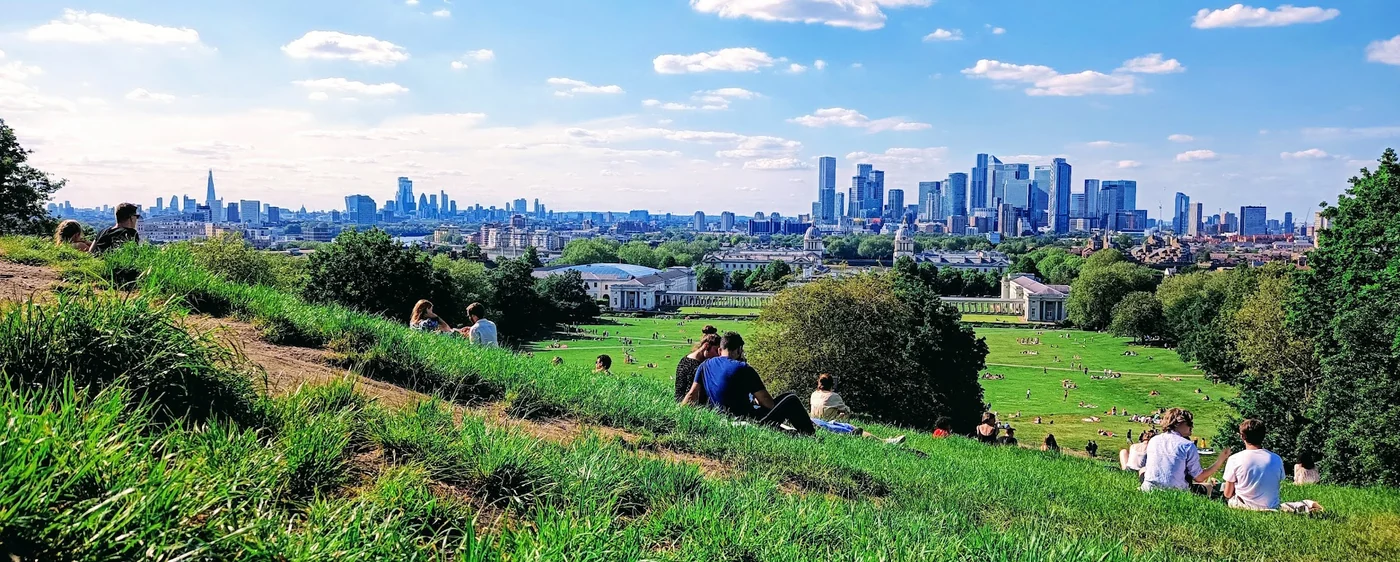
5. The historic Greenwich Meridian and a phone’s zero longitude need not match
Royal Museums Greenwich explains the historic Prime Meridian and why modern satellite-based positioning can show a different zero-longitude location. Seeing that difference does not mean the historic line was randomly placed or that the phone must be broken.
The fact opens a larger story about observation, instruments and the standards used to describe position. A line on the ground represents a particular history of measurement, not every later method being identical. If visiting Greenwich, use that question to look more closely at the interpretation rather than treating the stop solely as a photograph with one foot on each side.
6. Tower Bridge is a movable bridge, not another name for London Bridge
Tower Bridge’s construction history records its opening in 1894. Its central bascules rise to allow river traffic through. It is a particular bridge with its own engineering story, distinct from London Bridge despite the names sometimes being confused.
Look at the relationship between the road, towers and river rather than only the decorative outline. A movable crossing is a response to competing needs: people travelling across the water and vessels moving along it. If a bridge lift is important to your visit, check the current published information. A historical explanation of how it works cannot promise a lift at the moment you happen to arrive.
7. The Tower of London is a World Heritage property with many roles
UNESCO’s Tower of London description explains a complex historic property, associated with royal power, defence and imprisonment. The site should not be reduced to one isolated tower, a single moment or only the most frequently repeated story about it.
Look for the relationship between buildings, walls and approaches, and use the interpretation to distinguish their different periods and purposes. This is also a reason to separate the Tower from nearby Tower Bridge: geographical proximity does not make their ages or roles the same. A focused visit around one question can be more memorable than trying to absorb every story and object at equal speed.
Use a few facts to build a better local plan
Pick one part of London or one theme, such as transport or the river, and give the journey time and attention it needs. Check current opening and access information directly. If you are considering a home, explore the ordinary shopping and travel around it as well as the landmarks you enjoy visiting.
For the practical move, discuss London removals with the actual inventory and street access. Our moving plan guide helps settle keys and permissions before delivery. Keeping the household logistics clear makes it easier to start learning a capital that cannot be understood through one skyline or a single central outing.
Common questions
Is the City of London the same as Greater London?
The City is the historic Square Mile governed by the City of London Corporation. It is a specific area within the much larger capital.
Is Big Ben the name of the tower?
Its precise meaning is the main bell. Parliament identifies the tower as Elizabeth Tower, though the nickname is often used more broadly in everyday speech.
Are Tower Bridge and London Bridge the same crossing?
They are different bridges. Tower Bridge opened in 1894 and has rising central bascules to allow vessels through.
Official information for your planning
Source links checked on 19 October 2026. Recheck current requirements and visitor information before making plans.
Make a plan for your move
Send your collection postcode, destination, inventory and likely dates so your quotation can reflect the actual move.
Request a moving quote